In summer, fish early and late, follow fresh wind and oxygen, and look for carp near weed and the surface. In hot, still weather they often feed in short spells at dawn, so be fishing before first light.
What summer does to carp
Carp are cold-blooded, so warm water speeds everything up. They swim more, eat more and move around the lake more than at any other time of year. On paper, summer is the easiest season to catch them.
In practice it has its own problems. Warm water holds less oxygen, weed grows thick, the lake is busier and hot, bright days can leave carp lazing near the surface instead of feeding. Summer fishing is about timing and location more than clever rigs.
It's the opposite of winter carp fishing, where fish hold in small areas and eat very little. In summer there's food and activity everywhere, so the job is finding where and when they're feeding.
Oxygen: the hidden factor
Warm water simply can't hold as much dissolved oxygen as cold water. Weed and algae add oxygen in daylight but use it up at night, so in a long, hot, still spell oxygen is often lowest around dawn.
When oxygen is low, carp go quiet. They hang near the surface or in the freshest water they can find and feed very little. When it's high, they're active and feeding.
- Wind mixes air into the water. After a hot, still spell, the first fresh breeze can switch fish on.
- Rain cools the surface and adds oxygen. A summer shower is often followed by a burst of activity.
- Inlets, fountains and aerators are oxygen hot-spots in still weather.
- Deeper, open water can be fresher than weedy shallows in a heatwave.
Follow the wind
A long-standing rule is to fish into the wind, on the bank it's blowing towards. Wind pushes warm surface water, oxygen and natural food that way, and carp often follow it.
It isn't always right. A cold wind in spring can push fish away, and on some lakes they sit in the calm end. But in summer, a warm, steady wind is a good reason to look at the windward bank first.
Weed: shelter and food
By midsummer many lakes are full of weed. Carp love it: it gives them cover, shade and oxygen in daylight, and it's full of snails, shrimp and insects they feed on.
- Fish to clear spots and gaps in or next to weed, not on bare open water far from it. A marker rod helps you find them.
- In thick or soft weed, a chod rig sits on top where a bottom bait would be hidden.
- Use a lead set-up that can drop the lead if a fish gets weeded. See lead clip, helicopter or inline.
- Step up your line strength. You need to be able to steer fish away from weed and snags.
Dawn, dusk and the middle of the day
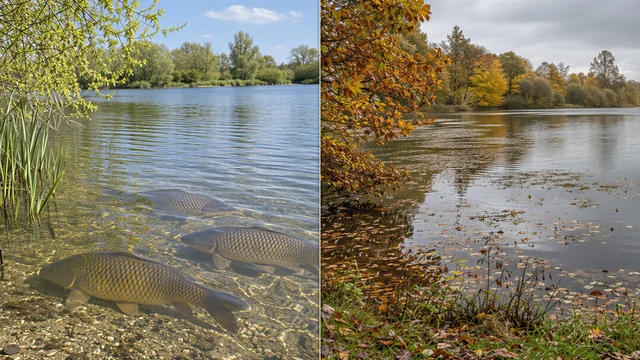
On hot days carp often feed hardest at first light and again in the evening. The middle of the day can be dead on the bottom, but that's when carp are most visible near the surface.
| Time | What carp often do | What to try |
|---|---|---|
| Dawn | Feeding spells, rolling and bubbling | Be set up before first light. Watch for signs of fish. |
| Midday heat | Cruising or basking near the surface | Surface fishing, zigs, or stalking in the margins |
| Evening | Feeding again as the light drops | Recast to fresh spots, top up the bait |
| Night | Varies a lot from lake to lake | Fish quietly. See the night fishing guide |
Bait in summer
Carp eat more when the water is warm, so you can usually put out more bait than in winter. How much depends on how many fish there are and how fast they clear it.
- Watch how quickly it goes. If you're getting bites and the spot is being cleared, keep topping it up.
- Mix sizes. Particles and small pellets keep carp grubbing about; boilies stand up to nuisance fish better.
- Expect competition. Tench, bream and birds feed hard in summer too. Bigger or harder baits help.
The carp bait guide covers the main types, and the bait calculator helps you plan how much to bring.
A summer session, step by step
- Check the forecast for wind direction and any change in the weather. A fresh wind or a break after a hot spell are good signs.
- Arrive early and walk the lake before you set up. Wear polarising glasses and look for fish near the surface, in the margins and in weed.
- Pick a swim with fish in it or close by, ideally with the wind blowing into it or near fresh, oxygenated water.
- Find clear spots near weed with a marker or by feeling the lead down, and match your rig to the bottom.
- Bait steadily, watch how fast it goes and adjust.
- If the bottom goes quiet in the heat of the day, try floaters or zigs to the fish you can see.
Don't just sit behind the rods. In summer, carp show themselves more than at any other time. Time spent watching the water is often worth more than time spent recasting.
Hot weather is hard on carp. Keep the fish in the net in the margin while you get ready, keep the mat and the fish wet, keep photos quick and return it as soon as you can. Leave spawning fish alone. Our carp care guide covers handling in detail.
Questions
What time of day is best for carp in summer?
Dawn and the first few hours after are often best, with evenings a close second. In hot, bright weather carp often feed less in the middle of the day and spend more time near the surface.
Why do carp stop feeding in very hot weather?
Warm water holds less oxygen. In long, hot, still spells the oxygen level can drop, especially at night and early morning in weedy lakes, and carp become sluggish until conditions improve.
Where should I fish on a windy summer day?
Often on the bank the wind is blowing into. Wind mixes oxygen into the water and pushes natural food and warmer surface water towards that end. It's not a rule, but it's a good starting point.
Should I use more bait in summer?
Usually yes, because carp eat more when the water is warm. Watch how quickly it goes. If fish are clearing it, keep it topped up; if not, cut back. Remember that other fish and birds will also take bait in summer.
How do I look after carp in hot weather?
Keep everything wet, keep the fish out of the water for as short a time as possible, rest it in the net in the margin before lifting, and return it quickly. Avoid long photo sessions in the heat.