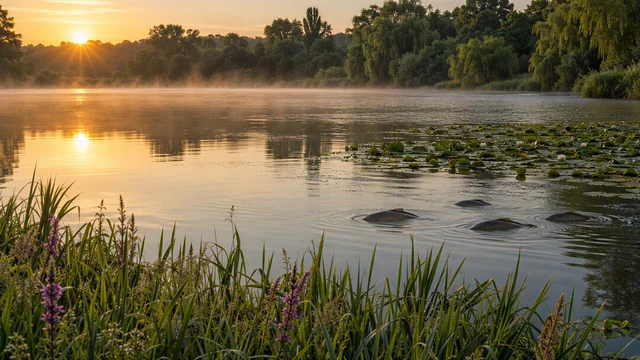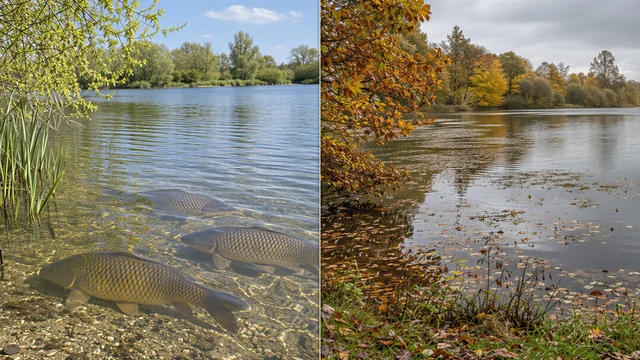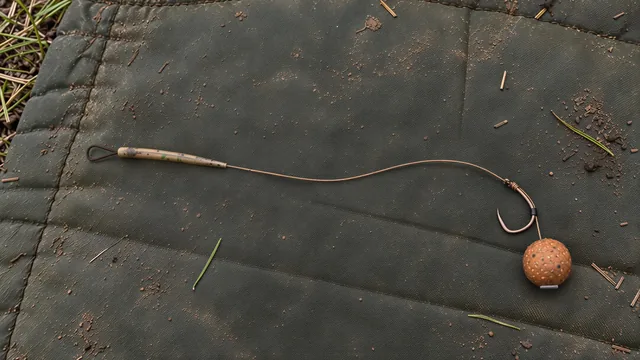
Yes, carp feed in winter, just less often and in short spells. Find where they're holding, use little or no free bait, and fish a bright, highly attractive single hookbait or a small PVA bag on each rod.
What changes when the water cools
Carp are cold-blooded. Their body temperature follows the water, and so does their metabolism. In summer they're active, feeding often and moving about the lake. As the water cools through autumn they slow down, need less food and spend more time resting.
They still feed, though. A carp in winter eats less often and in short spells, but it does eat. Winter carp fishing is about putting a bait where those short spells happen, and making it easy to find.
Water temperature, roughly
Every lake is different, so treat these as rough bands rather than rules.
| Water | Behaviour | Approach |
|---|---|---|
| Warm (summer) | Active, feeding hard, moving around | Bigger beds of bait, fish where you see them |
| Cooling (autumn) | Feeding up before winter | Often a good time. Keep baiting, but watch how much goes |
| Cold (winter) | Slow, holding in small areas, short feeding spells | Little or no free bait, bright single hookbaits, find the fish |
A cheap thermometer on a cord tells you more than the air temperature does. A few mild days in a row, especially with a south-westerly wind, can warm the water enough to switch fish on.
Find the fish first
In summer, carp come to your bait. In winter you have to go to them. They tend to sit in a few areas and stay there, so a swim with fish in it is worth more than any bait.
- Watch. Spend the first hour looking. Even in winter, carp show: a roll at first light, a single fizz of bubbles, or a patch of coloured water.
- Think about shelter. Deeper water, snags, dying weed beds and the bank that gets the sun can all hold fish.
- Ask. Bailiffs and regulars usually know where fish winter. Most will tell you.
- Move. If nothing happens and you see fish elsewhere, pack up and go to them.
Bait: less is more
A carp eating a fraction of its summer food won't clear a big bed of boilies. It may find one bait among a carpet of them, and that bait probably won't be yours. In cold water, cut right back.
- Fish single hookbaits, or a hookbait with a small PVA bag or stringer of a few baits.
- Use bright pop-ups or washed-out boilies. A visible bait gets found by a fish that isn't searching hard.
- Choose baits that release flavour in cold water. Liquid food soaks and glugs help, as do lower-oil, more digestible mixes.
- If you do bait, keep it small: a handful of crumbed boilie or a light sprinkle of pellet is often plenty.
- Recast to the same spots regularly with a fresh hookbait instead of adding more free bait.
A zig rig can work well on mild winter days, when carp sit up in the warmer upper layers of the water.
Rigs and presentation
Go slightly lighter and neater. A shorter hooklink and a sharp, smaller hook suit a fish that's feeding cautiously. Check your rig every time it comes in. Winter fish don't give many chances, so one blunt hook or a tangle can cost the only bite of the day.
Fish your spots carefully. Find them with a marker rod on arrival, then put your rods on them and leave them be.
Looking after yourself
Cold, wet and dark arrive early. A comfortable angler stays longer and fishes better.
- Layer up, and keep a dry change of clothes in the car.
- A bivvy overwrap and a good sleeping bag make night sessions bearable.
- Take a flask and a stove, and tell someone where you're fishing.
Never walk on ice, and never try to retrieve tackle from frozen water. If the lake freezes over, don't fish it: a carp hooked under ice can't be landed safely. Banks get slippery in frost, so take care in the dark.
Questions
Do carp feed in winter?
Yes. Their metabolism slows as the water cools, so they need less food and feed in shorter spells, but they don't stop eating. Mild spells and steady pressure often bring a few fish on to the feed.
What's the best bait for winter carp?
Smaller, more digestible baits with strong attraction tend to work better than big beds of heavy boilies. Bright pop-ups, single hookbaits, small PVA bags and liquid-soaked baits are common choices.
Should I put free bait out in winter?
Use far less than in summer. Carp are eating little, so a large bed can go uneaten and make your hookbait harder to find. Many anglers fish singles or a handful of freebies and only add more after bites.
What's the best time of day for winter carp?
There's no fixed rule, but on many lakes the warmest part of the day, often late morning into the afternoon, is a productive window. Keep a note of bite times on the waters you fish, as they often repeat.
Where do carp go in winter?
They tend to hold in a few areas: snags, deeper water, sheltered bays or wherever the water is slightly warmer. Watch for shows at first and last light, and fish where you see them rather than where you caught them in summer.