Only night fish where the fishery allows it, set everything up and find your spots in daylight, and keep a head torch, a dim bivvy light, spare power and your landing kit within arm's reach.
Before you go
Many carp feed at night, especially on pressured waters, and an overnight session doubles the time your baits spend in the water. But fishing in the dark makes simple jobs harder, so preparation matters more than kit.
Night fishing is only allowed where the fishery permits it. Many waters are day-ticket only, and others allow nights only for members or on booked swims. Check the rules and book before you plan a session.
Tell someone where you are and when you'll be back, and make sure your phone is fully charged.
Items required
- Head torch with a red or dim mode, plus spare batteries or a charging cable.
- Bivvy light, a dim one, so you can see inside the shelter without lighting up the lake.
- Power bank to keep your phone and torch charged.
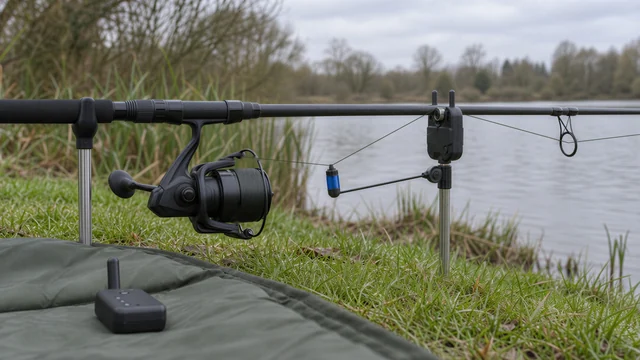
- Bite alarms with a receiver, so you hear a take from inside the bivvy. See choosing bite alarms.
- Warm layers, even in summer. Nights near water get cold.
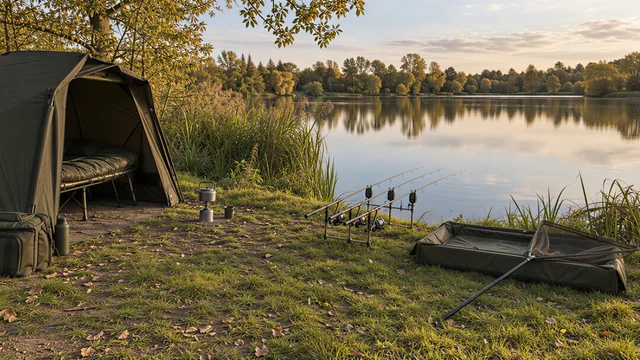
- Shelter and sleep kit: a bivvy or brolly, a bedchair and a sleeping bag. See your first overnighter.
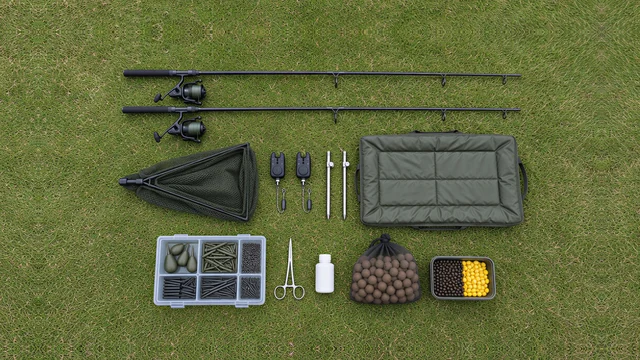
- Landing net, mat, forceps and antiseptic, laid out ready.
Set up in daylight
- Arrive with enough light to look around the swim, choose your spots and set up the shelter.
- Find your spots and clip up the distance for each rod. Use distance sticks and note a skyline marker so you can recast to the same place in the dark.
- Tie spare rigs and prepare PVA bags before dark. Fiddly jobs are much harder by torchlight.
- Set your landing net, mat, forceps and antiseptic in the same place, close to the rods, where you can find them without looking.
- Check the swim for trip hazards, and know where the water's edge is.
- Set your alarms and receiver, and check the receiver works from inside the bivvy.
Keep everything in the same place every session. When an alarm wakes you at 3 a.m., you'll reach for the net without thinking.
Landing a carp at night
- Put your shoes on before you leave the bivvy, and switch the head torch to its dim mode.
- Pick up the rod and play the fish calmly. Guide it towards you rather than pulling it.
- Sink the net and only lift when the fish is fully over it.
- Use the white light when unhooking, so you can see the hook hold clearly.
- Keep the fish on the wet mat. Unhook, treat with antiseptic, and return it promptly.
Lights and courtesy
| Light | When to use it |
|---|---|
| Red or dim head torch | Moving around the swim, re-baiting, checking the rods |
| White head torch | Landing, unhooking and looking after a fish |
| Dim bivvy light | Inside the shelter only |
Never shine a torch across the water or into another angler's swim. It disturbs fish and anglers alike.
Never cook or run a gas heater inside a bivvy because of the fire and carbon monoxide risk. Don't walk along the water's edge in the dark if you can avoid it, and keep a life-saving rope or a ring within reach if the fishery provides one.
Night fishing in cold weather needs extra care: see winter carp.
Questions
Is night fishing allowed everywhere?
No. Many fisheries are day-ticket only, and some only allow night fishing for members or on booked swims. Check the rules and book where you need to before you plan an overnight session.
Should I use a white or red head torch?
Use red or a dim setting around the swim and when re-baiting, so you don't dazzle yourself or other anglers or light up the water. Switch to white only when you need it, such as when landing or unhooking a fish.
How do I find my spot again in the dark?
Clip up the distance in daylight and use distance sticks, and note a skyline marker for each rod. Then you can recast to the same spot at night without guessing.
What is the safest way to land a carp at night?
Have the net, the mat wet and the forceps in the same place every time. Play the fish under your rod tip, sink the net and lift only when the fish is over it. Use your head torch sparingly and keep the fish on the mat while you unhook.
What should I tell someone before a night session?
Tell someone where you are fishing, when you expect to be back, and make sure your phone is charged. Know where the fishery's emergency information is.
Is it safe to cook in a bivvy?
No. Never cook or run a gas heater inside a bivvy or tent because of the fire and carbon monoxide risk. Cook outside in the open air, away from the fabric.