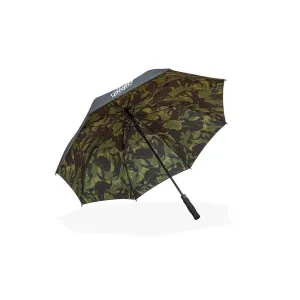
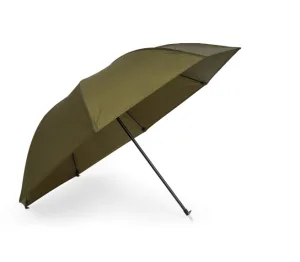
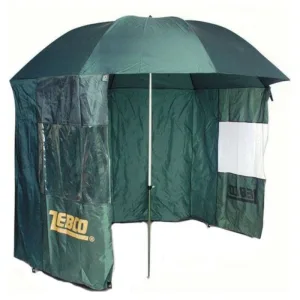
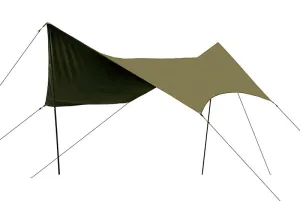
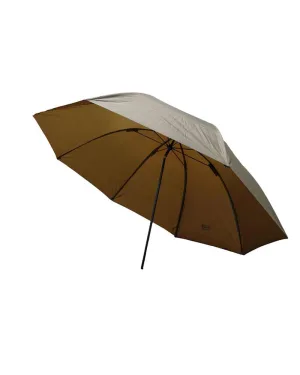
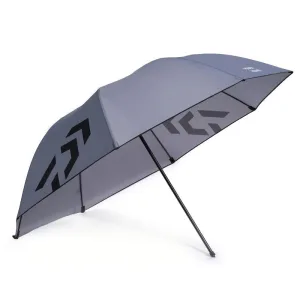
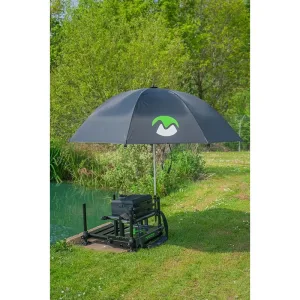
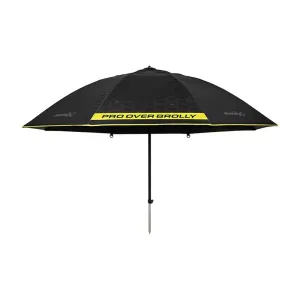
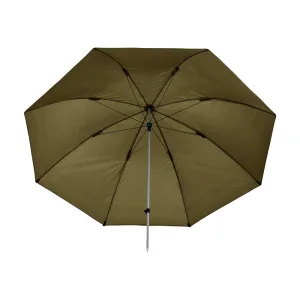
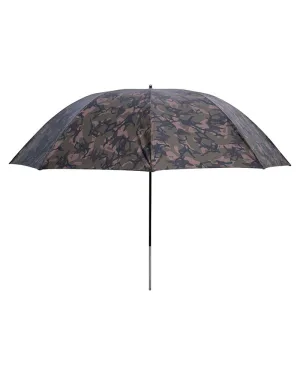
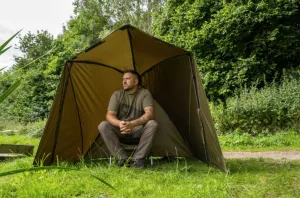
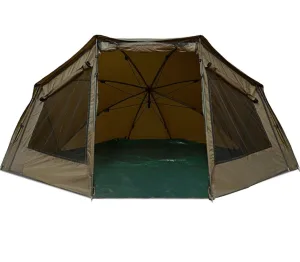
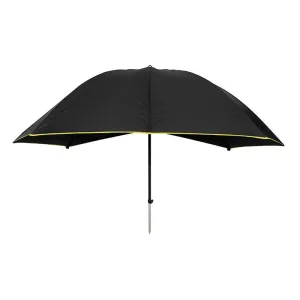
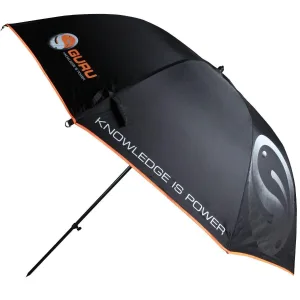
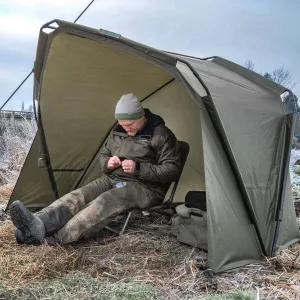
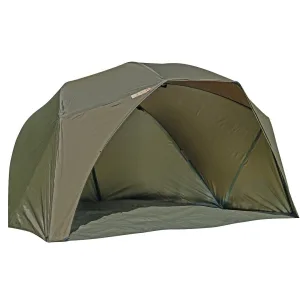
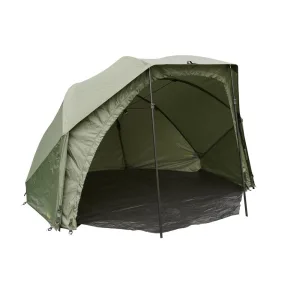
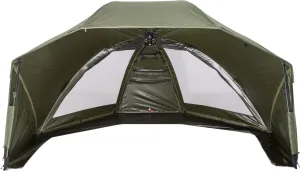
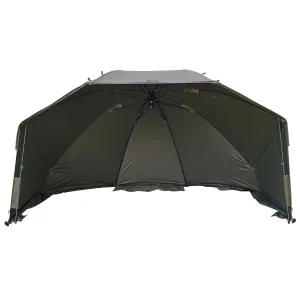
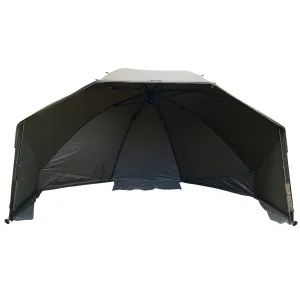
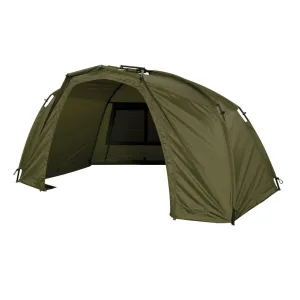
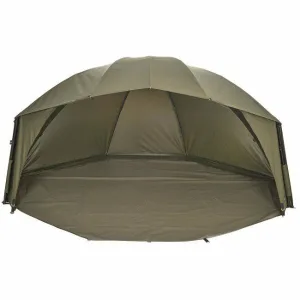
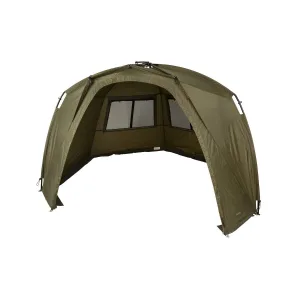
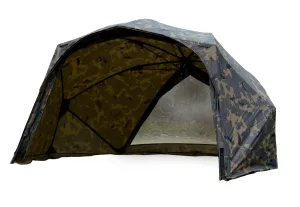
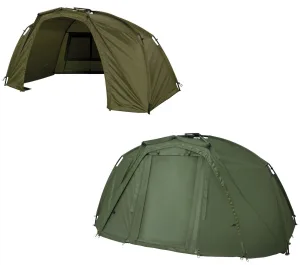
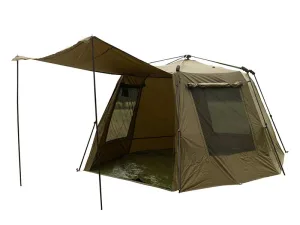
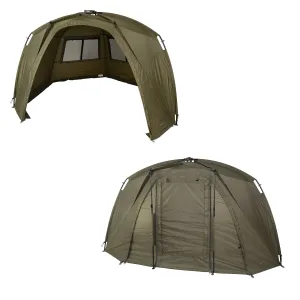
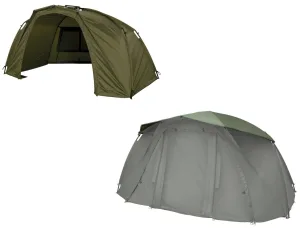
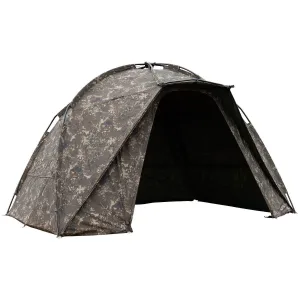
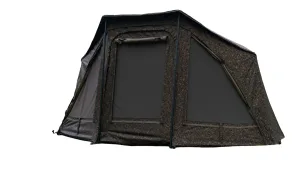
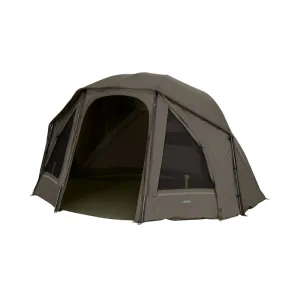
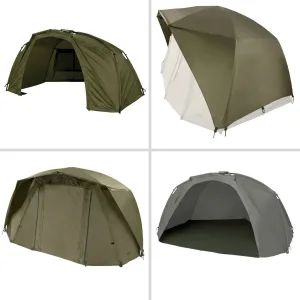
A brolly is the quickest shelter you can put up on the bank: open it, peg it, and you're out of the rain while the rods go out. For mobile anglers and short overnighters it often replaces a bivvy altogether. These picks are judged on the listed waterproofing, frame and kit included, not on hands-on testing.
Compared
What actually matters
Brolly or bivvy?
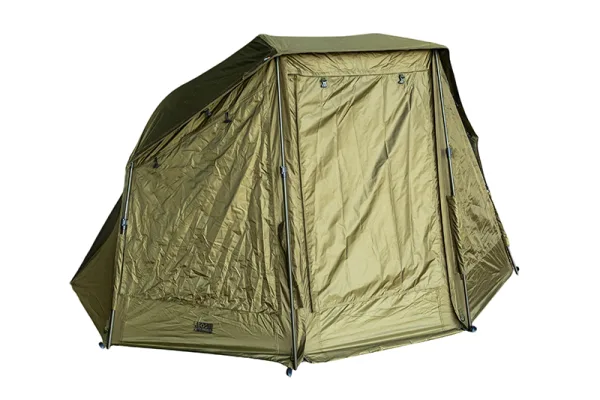
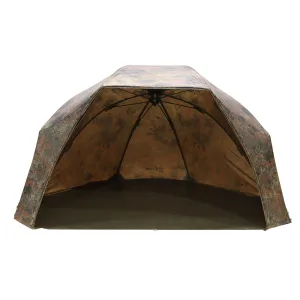
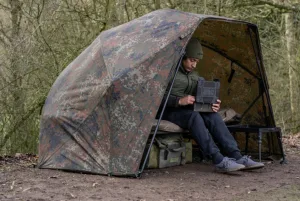
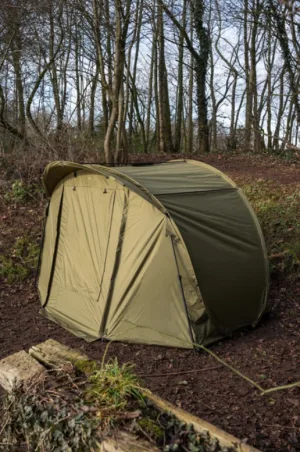
A brolly is lighter and quicker to pitch, which suits day sessions, short overnighters and anglers who move swims to find fish. A bivvy gives more space, a full front and a groundsheet, and is better for long sessions and winter. A brolly system with a front panel sits in between.
Waterproofing
The hydrostatic head (HH) tells you how much water pressure the fabric takes before it leaks. 2,000–3,000mm is fine for summer showers on a day session. For overnights, especially in autumn and winter, look for 8,000–10,000mm and taped seams, and a sealed bell cap at the centre where cheaper brollies tend to drip.
Size and shape
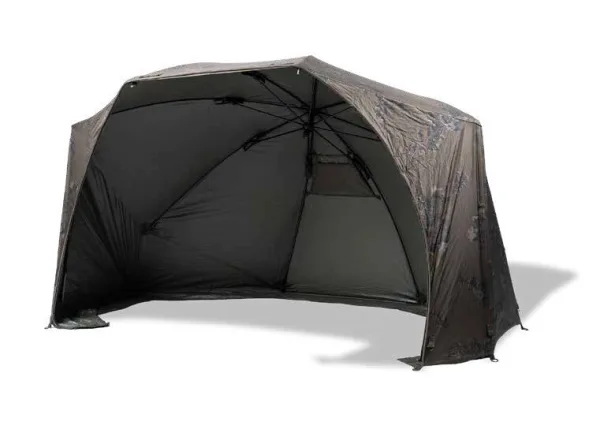
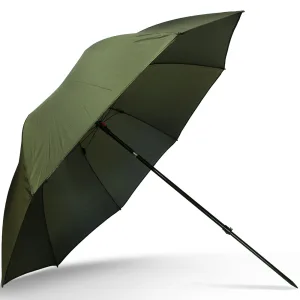
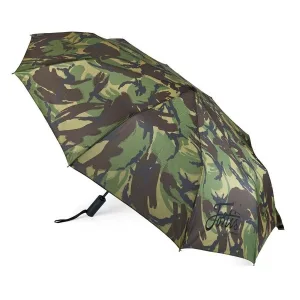
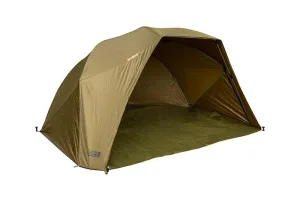
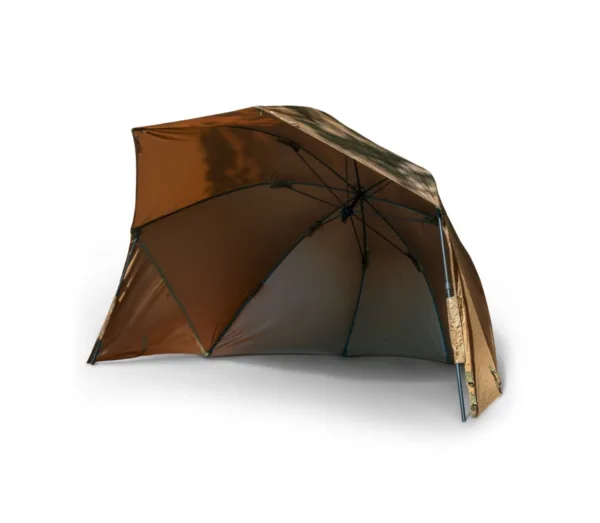
A 60in brolly is the standard for fitting a bedchair underneath. Oval and extended designs give more headroom and room at the sides for your kit, while smaller 45–50in brollies are for day fishing and keeping the rain off a chair.
Storm poles and pegging
Wind is the real test. Storm poles and plenty of pegging points stop the brolly lifting or turning inside out. Check whether storm poles are included, because on some cheaper models they're extra. Pitch with the back to the wind and peg everything.
Fronts, mesh and condensation
An open-front brolly lets you watch the water. Infill panels or mesh fronts keep out rain and insects at night. Never use a gas stove or heater inside a brolly or any enclosed shelter, as carbon monoxide can kill. For what else to pack, see your first overnighter and our night fishing guide.
Questions
What size brolly do I need for carp fishing?
A 60in brolly is the usual size if you want to fit a bedchair underneath. Smaller 45–50in brollies are fine for day sessions in a chair.
Can I fish overnight under a brolly?
Yes, plenty of anglers do, particularly in spring and summer. Choose a brolly with a good hydrostatic head, storm poles and ideally a front panel or mesh, and add a groundsheet if one isn't included.
What hydrostatic head should a brolly have?
For day sessions, 2,000–3,000mm keeps showers off. For overnights and wet weather, look for 8,000mm or more, with taped seams.
How do I stop my brolly blowing away?
Pitch it with the back to the wind, use every pegging point and fit storm poles. Drive pegs in at an angle away from the brolly and check them before dark.
Is it safe to cook under a brolly?
Cook outside or in a well-ventilated open front, never in an enclosed shelter. Gas stoves and heaters give off carbon monoxide, which can kill in a confined space, and they are also a fire risk.

 Budget