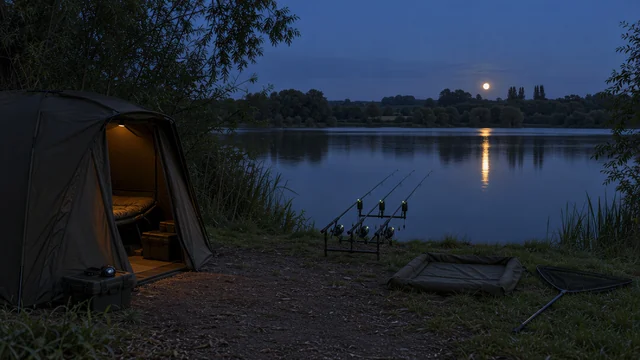
For a first night you need a shelter (brolly or bivvy), a bedchair and a sleeping bag suited to the season, a head torch, warm clothing, food and water, and a stove used outside the shelter. Check the fishery allows night fishing first.
Why fish through the night
On many lakes carp feed well after dark and at first light. A night session puts you on the bank for both, and gives you time to settle into a swim instead of rushing. It's also, for a lot of anglers, the best part of carp fishing.
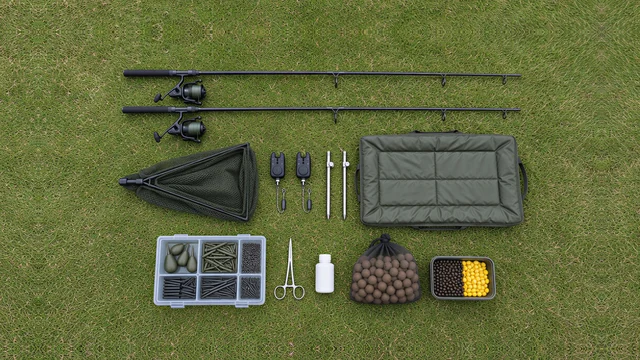
This guide picks up where your first carp session leaves off. You already have rods, alarms, a net and a mat. Here's what you need on top of that to stay dry, warm, fed and safe for a night.
Items required
- Shelter: a brolly with sides or a one-person bivvy.
- Bed: a bedchair, or a camping mat for a first try in mild weather.
- Sleeping bag: rated for the coldest night you expect.
- Light: a head torch with a red-light mode, plus spare batteries or charge.
- Clothes: warm layers, a hat and a waterproof jacket, even in summer.
- Food and water: enough for the session, plus a stove, gas and a kettle or pan.
- Power: a power bank for your phone and alarm receiver.
- Permission: confirm the fishery allows night fishing and that you've booked if needed.
Shelter: brolly or bivvy
| Brolly with sides | One-person bivvy | |
|---|---|---|
| Set-up | Quick, light | Slower, heavier |
| Weather | Fine in mild, settled weather | Better in wind, rain and cold |
| Space | Bedchair and a little kit | Bedchair plus kit storage |
| Best for | Summer nights, short sessions, moving swims | All year, longer sessions |
Practise putting your shelter up at home first. Doing it for the first time in the dark, in the rain, is no fun.
Bed and sleeping bag
A carp bedchair has adjustable legs that level it on a sloping bank, and it keeps you off the cold, wet ground. It's the single biggest comfort upgrade for night fishing.
Sleeping bags are sold by season rating. Nights by water are colder and damper than you expect, even in summer, so err on the warm side. A cover or fleece blanket over the bag adds warmth and keeps dew off.
Sleep with your boots or shoes somewhere you can grab them instantly, and leave the bivvy door so you can get out fast. When the alarm goes, you'll want to be at the rods in seconds.
Cooking and food
A hot drink and a hot meal make a cold night far better. Keep it simple: a small gas stove, a kettle or pan, and food that only needs boiling water or a quick fry.
Gas stoves give off carbon monoxide and are a fire risk. Always cook outside, in the open air, on a stable flat surface. Never take a stove or gas heater inside a bivvy or brolly to keep warm. Carbon monoxide can kill in an enclosed space.
Light and power
- Head torch: use the red-light mode at the water's edge. It's easier on your night vision and doesn't spook fish or annoy other anglers.
- Bivvy light: a small light inside makes finding kit much easier.
- Power bank: keep your phone charged for safety and to check the weather.
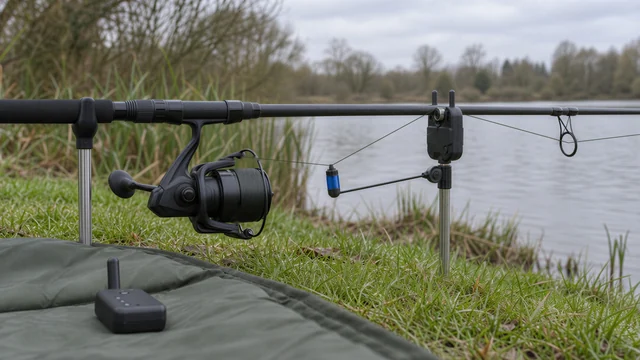
- Receiver: a bite alarm receiver in the bivvy means you hear every bite without having alarms at full volume.
Planning the night, step by step
- Check the fishery rules and book a swim if you need to. Tell someone where you're going and when you'll be back.
- Arrive with at least two hours of daylight left. Walk the lake, choose a swim and get the rods out first.
- Set up the shelter, bedchair and sleeping bag while you can still see.
- Lay out the landing net and unhooking mat by the rods, ready to use. Put the head torch where you can find it instantly.
- Cook and eat before dark, outside the shelter.
- Before you settle down, check the rods, alarms and receiver, and that your line clips and bobbins are set.
- At first light, be up and watching. It's often the best time of the session.
Safety and courtesy
- Know your way to and from the swim in the dark, and keep away from the edge when you're tired.
- Keep noise and lights down. Sound travels across water at night.
- Take all your rubbish home.
- See the night fishing guide for more on fishing in the dark.
Questions
Do I need a bivvy for my first overnighter?
You need some shelter. A brolly with sides (an overwrap or brolly system) is fine in mild weather and is often cheaper and lighter. A full bivvy is warmer and drier in poor weather and in winter.
Can I cook inside my bivvy?
No. Gas stoves give off carbon monoxide and can start fires. Always cook outside, in the open air, and never take a stove or gas heater into the bivvy to keep warm.
How warm a sleeping bag do I need?
More than you think. Even in summer, nights by a lake can be cold and damp. Look at the season rating and pick one rated for the coldest nights you'll fish. A fleece blanket or cover adds warmth.
Is night fishing allowed everywhere?
No. Many fisheries and clubs only allow night fishing on certain days, in certain swims, or for members. Check the rules and book if you need to before you go.
How do I stay safe on a night session?
Tell someone where you are and when you'll be back, keep your phone charged, know the way off the bank in the dark, and set up while it's still light. Keep your landing net and mat ready by the rods so you're not searching in the dark.