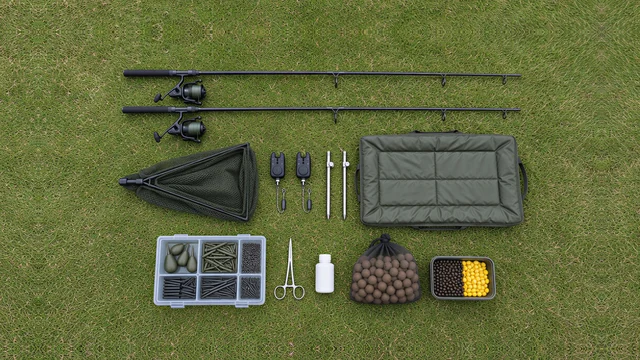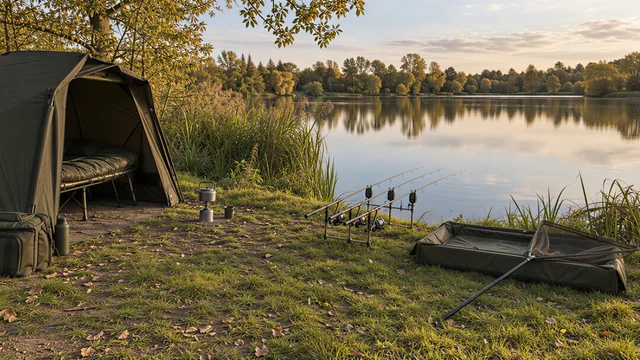
Buy a set of alarms with adjustable sensitivity, volume and tone, plus a wireless receiver if you'll fish at night or sit away from the rods. A mid-range set does everything most anglers need. Premium sets add better build, water resistance and more precise sensing.
What a bite alarm does
A bite alarm sits on a bank stick or rod pod, with the rod resting in a groove on top. Your line runs over a small wheel or sensor in that groove. When a carp picks up the bait and moves off, the line moves, and the alarm beeps and lights up.
Alarms let you fish for hours, or through the night, without watching the rod tips. A run, a fast steady stream of beeps, means a fish is taking line. Odd single bleeps are usually line bites, wind or a fish brushing the line.
How they detect line
Roller wheel
Most alarms use a wheel the line turns as it passes. A magnet in the wheel trips a sensor, and each pulse is a beep. They're simple and reliable, and they work well in all weathers.
Vibration sensing
Some alarms add a vibration sensor that picks up the tiny twitches of a fish moving the line without pulling it. That can give earlier warning of a pick-up, but turned up high it also beeps for wind and rain.
Roller-less
A few designs use a fixed sensor with no moving wheel. Nothing can freeze or clog, but the sensor has to be good to match a wheel.
The features that matter
- Sensitivity. How far the line has to move before the alarm beeps. You'll want it lower on windy days or with flowing water, and higher on still nights.
- Volume and tone. Each alarm should be set to a different tone, so you know which rod is going without looking.
- Drop-back. When a fish swims towards you, the line goes slack rather than tight. Good alarms play a different tone for line moving backwards.
- Night light. An LED that stays lit for a few seconds after a bite helps you see which rod went in the dark.
- Waterproofing. Look for a sealed design. Rain and condensation are the most common thing that kills cheap alarms.
- Battery. Most use a 9 V or AA batteries. Check how they're held in. An awkward battery door is a pain at 3 am.
Receivers
A receiver (or handset) is a small wireless unit that copies every beep and light from your alarms. Keep it in the bivvy or your pocket and you can turn the alarms right down, so you don't disturb other anglers, while still hearing every bite.
Most sets sell as two, three or four alarms with a receiver. Many receivers also vibrate, which is handy if you're asleep or wearing a hood. Check the range in the specs, and remember trees and bivvy walls reduce it.
Many fisheries ask for alarms to be kept quiet at night. Turn the alarms down to a low volume and use the receiver in the bivvy. Your neighbours will thank you.
Indicators: the other half
An alarm tells you the line moved. An indicator shows you how. Swingers (a weighted arm on a hinge) or hangers (a weight on a cord) clip onto the line between the alarm and the reel.
- Up: the indicator lifts to the alarm as a fish pulls line off.
- Down: it drops as the line goes slack, which is a drop-back bite.
Heavier weights suit tight lines and wind. Lighter ones show more detail on slack lines. A pair of snag ears on the alarm stops the rod being pulled off the rest in a strong run.
What you get as you spend more
| band | typically |
|---|---|
| budget | Roller wheel, adjustable volume and tone, basic receiver. Weather sealing varies, so check reviews from other anglers. |
| mid | Better seals, drop-back tones, night lights, vibration sensing, receivers with range and vibrate. Spares and repairs available. |
| premium | Very fine sensitivity control, robust waterproofing, long warranties and a manufacturer repair service. Popular with anglers who fish many nights a year. |
For your first set, a budget or mid set with a receiver is plenty. Upgrade when you're fishing most weekends, or when the weather starts beating your alarms. See the first session kit list for the rest of the set-up.
An alarm only helps if you're there to answer it. Most fisheries ban leaving rods out while you walk off, and a carp can drag an unattended rod into the lake or end up snagged.
Questions
Do I need a receiver with my bite alarms?
Not for daytime sessions sat next to your rods. For night fishing or when you're a few metres away, a receiver lets you hear runs in the bivvy without turning the alarm volume up and disturbing other anglers.
Why does each alarm need a different tone?
So you know straight away which rod has the run. With three rods on the same tone, you can lose valuable seconds working out which one to pick up.
What sensitivity should I set?
Start in the middle. Turn it down on windy days, in flowing water or with drifting weed, when the line moves without a fish. Turn it up on calm nights, so you hear small drop-backs and twitches.
Are cheap bite alarms any good?
Budget alarms work and are fine for learning. They're usually less water-resistant and less precise, and their receivers often have shorter range. If you fish often, especially at night, mid-range alarms are worth the extra.
What's a drop-back?
A drop-back is when your indicator falls instead of rising, because a fish has picked up the bait and swum towards you, slackening the line. Many alarms give it a different tone, and it should be struck at just like a run.