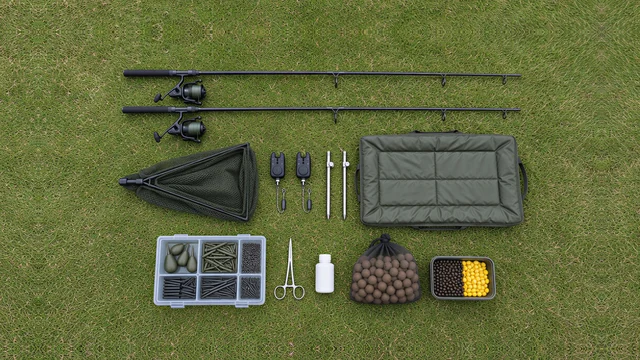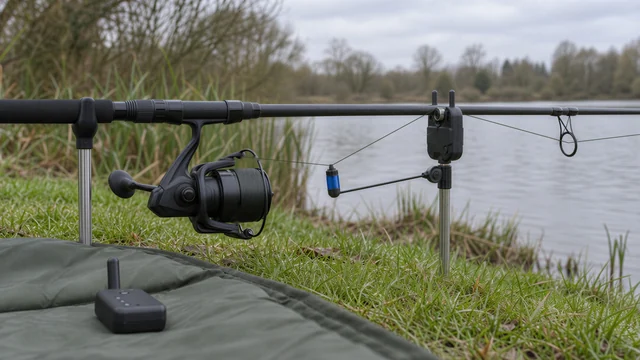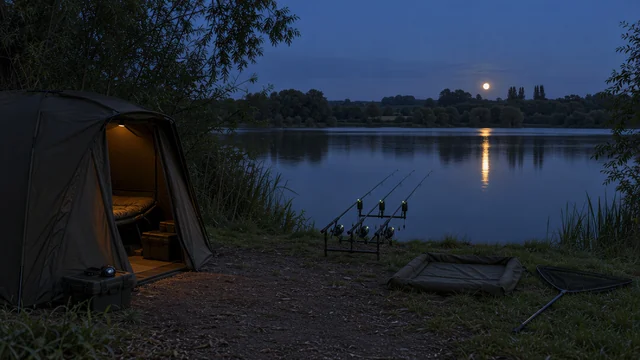
A first carp rod should be about 12 ft long with a 2.75 to 3 lb test curve, matched to a freespool or big-pit reel. Buy two or three identical set-ups. Mid-range gear lasts longest for the money, but budget gear catches carp too.
What to look for in a carp rod
Carp rods are described by two numbers: length and test curve. Get those right and almost any rod will do the job.
Length
12 ft is the standard length. It casts well, gives you good control of a fish under the rod tip, and suits most lakes. 10 ft rods are easier on small, overgrown waters and for stalking in the margins. 13 ft rods are for long-range casting on big waters.
Test curve
The test curve is the weight needed to bend the rod tip at 90 degrees to the butt. It tells you how powerful the rod is. A higher number means a stiffer rod that casts heavier leads further.
| Test curve | Best for |
|---|---|
| 2.5–2.75 lb | Small and medium lakes, short to medium range, lighter leads, an enjoyable fight |
| 3 lb | The all-rounder: 3–4 oz leads, most distances, PVA bags |
| 3.5 lb+ | Long range, big leads, and as a spod or marker rod |
A rough rule is that a rod casts a lead of about one ounce for each pound of test curve, or up to a third more. So a 3 lb rod suits a lead of around 3 to 4 oz.
What to look for in a carp reel
Freespool
A freespool (or baitrunner) reel has a second, light drag you switch on while waiting for a bite. A fish can take line without pulling the rod off the rest. One turn of the handle switches back to the main drag. For a first set-up, this is the easiest reel to use.
Big-pit
A big-pit reel has a large, shallow spool that lets line peel off with less friction, so it casts further. Big-pits are heavier and cost more. They really earn their keep on big waters where you're casting a long way.
Size and line capacity
The reel must hold at least 200 m of 12 to 15 lb mono. Match its size to the rod: a small reel on a 12 ft rod feels top-heavy, and a big-pit on a 10 ft rod feels clumsy.
Budget, mid-range and premium
| Budget | Mid-range | Premium | |
|---|---|---|---|
| Rods | Heavier blanks and simpler fittings, but they catch carp | Lighter, better balanced, better guides and handles | Lightest, crisp actions, top-quality components |
| Reels | Fewer bearings, rougher drag; fine for occasional use | Smooth drags, more bearings, long lasting | Very smooth, durable, often big-pit designs |
| Who it suits | Trying carp fishing, juniors, spare set-ups | Most anglers; the best value over time | Regular anglers who know what they want |
Rod and reel combos and full starter kits are a cheap way to begin. Check what's included before you buy. A starter kit with poor alarms or a small net can cost more to fix later than buying the right parts first.
Spend where it matters most: a smooth, reliable reel drag and a rod that suits your water. Bivvies, chairs and bags can be upgraded later.
Choosing your first set-up
Items required: two or three rods, matching reels, mainline, and a holdall or rod sleeves to carry them. In England a standard coarse rod licence covers up to two rods; for three you need the three-rod licence.
- Decide where you'll fish most. Small, overgrown waters suit 10 ft rods; most lakes suit 12 ft.
- Choose a test curve. 2.75 to 3 lb suits most anglers.
- Pick a freespool reel that holds at least 200 m of 12 to 15 lb mono.
- Buy two or three identical set-ups, so every rod casts and plays fish the same.
- Spool up with mono, as explained in the mainline guide.
Make sure your rods are strong enough to land fish quickly. A rod or line that's too light for the water means long fights and exhausted fish. Many fisheries set minimum line strengths for this reason.
Next steps
With the rods and reels sorted, see your first carp session: the kit list for everything else you need, and choosing bite alarms for the next big purchase.
Questions
What test curve should my first carp rod be?
2.75 to 3 lb suits most lakes. It casts standard 3 to 4 oz leads to normal fishing distances and still bends nicely when playing a fish. Go to 3.5 lb only for long-range work or heavy spods.
Is a 10 ft or 12 ft carp rod better?
12 ft is the all-rounder: it casts further and gives more control. A 10 ft rod is easier on small, overgrown waters and for stalking, and easier to carry. Many anglers start with 12 ft.
Do I need a big-pit reel?
Not for most lakes. Big-pit reels have large spools that help long casts, but they're heavy. A freespool reel is easier to use and lets a fish take line without pulling the rod in.
What is a freespool or baitrunner reel?
It has a second, light drag you switch on while waiting for a bite. A fish can take line freely without dragging the rod in. Turning the handle switches back to the main drag to play the fish.
Should all my rods and reels match?
Yes, ideally. Matching rods cast the same way and matching reels have the same line, so your rigs land at the same distance and you get used to one feel.
Sources
- Buy a rod fishing licence, GOV.UK