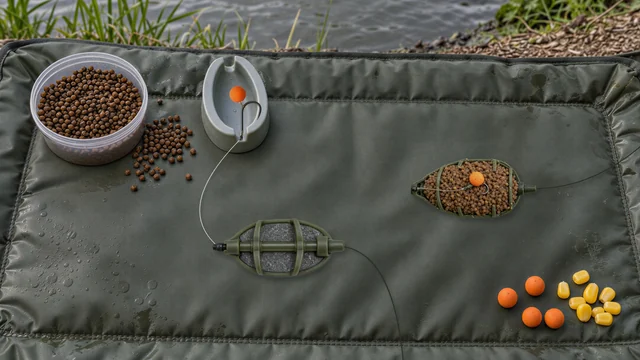
Use a solid PVA bag over weed or debris and when you want the rig tangle-free, a mesh stick for quick, compact parcels of pellets or crumb, and a stringer of a few boilies for a small, neat hookbait offering.
What PVA does
PVA is a plastic that dissolves in water. You fill a bag or tube of it with dry bait, attach it to your rig, and cast. Within a minute or two it melts and leaves a small, tight pile of bait sitting right next to your hookbait.
That solves two problems at once. Your hookbait is guaranteed to be among free food, however far you cast, and the bag protects the hook in flight so the rig lands without tangling.
Bags, sticks and stringers
| Type | What it is | Use it when |
|---|---|---|
| Solid bag | A sealed PVA bag with the lead and rig inside, packed with pellets or crumb | Fishing over weed, silt or debris, or when you need a tangle-free rig |
| Mesh stick or bag | A tube of PVA mesh filled with fine bait and threaded onto the hooklink | Quick, repeatable parcels of bait on a clear or lightly weeded bottom |
| Stringer | Two to four boilies threaded on PVA string and hung from the hook | A small, neat offering with boilie freebies right by the hookbait |
Items required
- Solid PVA bags and/or a PVA mesh system with a plunger
- PVA string or tape for stringers and tying off
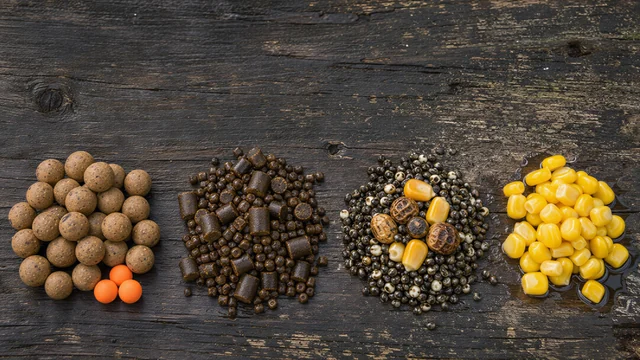
- Dry bait: pellets of mixed sizes, crumbed boilie or groundbait
- A baiting needle and a towel to keep your hands dry
How to tie a solid bag
- Fill the bottom of the bag with a little bait to make a bed.
- Drop in your lead and hooklink, with the hookbait sitting about halfway up the bag.
- Pack bait around the rig and press it down hard. Air pockets make a bag float.
- Twist the top tight, then tie it off with PVA string or tape. Lick the corners and fold them in to make a neat, aerodynamic shape.
- Leave the hook point buried inside so it can't catch on anything when you cast.
How to make a mesh stick
- Slide the mesh onto the tube and tie a knot in the end.
- Spoon in fine bait and tamp it down firmly with the plunger. Tight sticks cast further and sink straight away.
- Push the mesh off the tube, twist and tie or cut the end.
- Thread the stick onto the hooklink with a baiting needle, right up against the hook, or nick the hook point through the mesh.
Make a batch of sticks or bags before you start fishing and keep them in a dry, sealed tub. Every recast is then quick, and the same each time.
What size?
Smaller is usually better. A bag about the size of a large thumb casts accurately and leaves a neat pile that a carp clears quickly, which brings it straight to your hookbait. Big bags carry more bait but are harder to cast, land with a heavier splash and take longer to melt.
Common mistakes
Wet bait
Anything wet will melt the PVA before you cast. Dry corn and particles on a towel first, or use PVA-friendly liquids made for the job.
Bags that float
Loose packing traps air. Tamp the bait down hard, pierce the bag a few times with a baiting needle and keep the lead inside or right against it.
Slow melting in winter
PVA dissolves more slowly in cold water. Use thinner or fast-melt PVA, and test a piece in a cup of lake water so you know how long it takes.
Use a lead arrangement that lets the lead come off if the line breaks: see lead clip, helicopter or inline. Take spare PVA and packaging home with you.
Questions
Does PVA melt in water?
Yes. PVA dissolves in water, usually within a minute or two depending on the water temperature and the product. Cold water slows it down. Always keep PVA and your hands dry until the cast.
What can I put in a PVA bag?
Anything dry: pellets, crumbed boilie, groundbait and dry particles. Wet baits such as corn straight from the tin will melt the bag, so dry them first or use a PVA-friendly liquid made for the job.
What size PVA bag should I use?
Small bags of around a large thumb size suit most lakes and cast well. Bigger bags carry more bait but are harder to cast accurately and can plug up if they're packed loosely.
Is PVA bad for the environment?
Fishing PVA is designed to dissolve fully in water. Don't throw unused bags or packaging in the lake, and take your PVA wrappers home.
Why does my PVA bag float?
Trapped air. Pack the bag tightly, pierce it with a needle if needed, and make sure the lead is inside or right against it. A bag with air inside will float until it dissolves and your bait will spread.